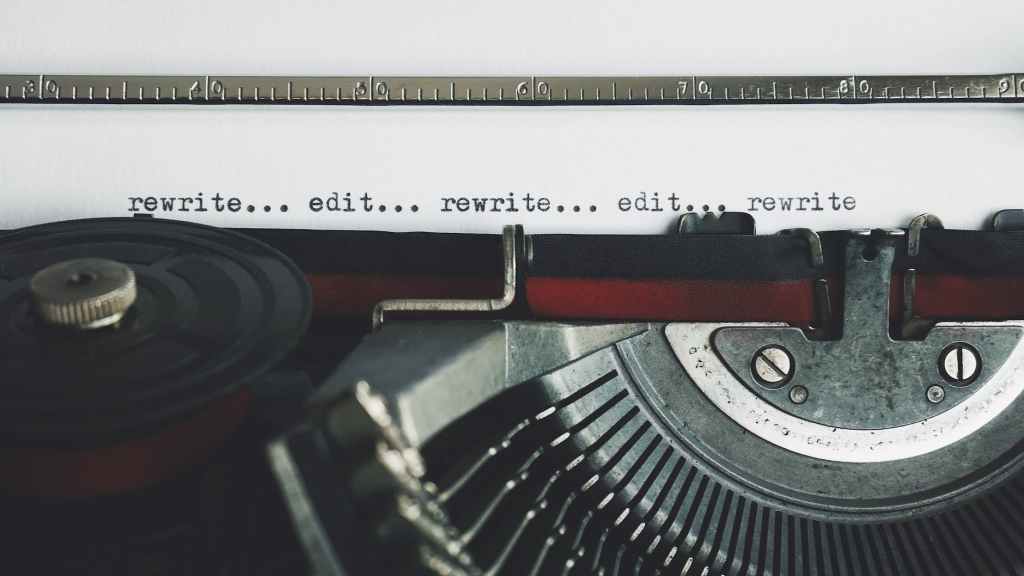
What’s the “vision of the expert” in proofreading?
Have you ever wondered why it’s so hard to spot errors in your own writing? Let’s explore the concept of “vision of the expert” in proofreading. The vision of the expert is the point of view of the writer, along with all the background and knowledge that they possess. I named it like that years ago when I was starting my proofreading and editing career.

You see, I noticed that in scientific articles, theses, books, and even blog articles, the authors wrote incomplete ideas. Moreover, sometimes, they just had “random” sentences in the middle of the text.
For example, I would be reading about how to improve readability on scientific articles, and out of the blue, the following sentence says that there are other ways to increase the number of citations of your scientific article. One can read that and think, hmmm, there must be a relationship; however, it is not clear enough. The information was not complete, and it would have been better (and clear) if they had said, “Improving readability might increase the chances of your article to be cited, at least that’s what Dowling et al. (2018) found after analyzing thousands of abstracts in the Economics Letters journal. However, there are other ways to increase the number of citations your article receives, including making your article easier to find by search engines.”
When I run into a “vision of the expert”-like sentence, I usually ask the person what they meant, and they tell me how those sentences were related (as in the example that I shared before). What happens is that the authors know the relationship between separate sentences, the context, and much of the theory that complements the text, so they can miss gaps because their brains would fill them automatically.
Why should we be careful with the vision of the expert, and what can we do?
We should be careful with the vision of the expert because we write for others (most of the time), and not all of our ideas might be grasped by our readers unless we explain them. Yes, I know. We cannot write with ALL readers in mind but focus on the people who will most likely read us. However, there are still a couple of things that we can do:
- Read your article from the top to the bottom. If you start proofreading the last sections, you might spot errors or issues. We usually read (and write) from the beginning and end up too tired at the end, which makes us more prone to making mistakes.
- Don’t rush. It’s best to give yourself time to read your writing slowly.
- Ask someone to read the text to you or read it yourself aloud.
- Set time apart to focus. Distractions surround us, so we need to hone and apply our time-management skills.
- Imagine that you are explaining the subject to a beginner. Regardless of whether your beginner is a teenager, an undergrad, or a solopreneur, among others, you can always put yourself in their shoes and figure out a better way to express yourself so a beginner can better understand what you mean to say.
To wrap up, understanding the vision of the expert can affect our approach to proofreading. It’s not just about catching typos —it’s about clearly delivering what we want to say. After all, our goal as writers is to be understood, not just read.
Now, do you find it hard to proofread your writing? Is there any tip or trick that helps you? If so, don’t hesitate to share it in the comments below. I’d love to hear (read) them.
PS: You can also contact me on Fiverr if you want extra help with proofreading and editing.
PS2: I crafted the example used in this article. Any coincidence with actual articles or experiences is just that… a coincidence.
Knowing more:
You can read more about why it’s hard to proofread our own writing, Self-Editing Strategies for Proofreading, Time-management tips that you can apply right away, and explaining complex ideas effectively.
About the Author:
I’m Astrid, a biologist who made a career shift to become a virtual assistant and an accountability partner. My journey from the world of science to customer service and freelancing has given me a unique perspective on life, and I sometimes share it here on WordPress.
Do you need a capable and reliable accountability partner? Contact me on Fiverr or LinkedIn.
Latest posts
-

Accountability is more powerful than I thought
Something strange happened this month, and I honestly was not expecting it. Last year, I started working as an accountability partner, and yes, I have helped more than a dozen people to focus and work… Read more
-

The Science of Paying Attention: Why I Stopped Scribbling and Started Using Fathom AI
I remember sitting in a meeting with my thesis supervisor while we were planning our next steps. As she spoke, I lowered my head to scramble some annotations in my notebook. Suddenly, she stopped and… Read more
-

Why Guilt Kills our ADHDers’ To-Do Lists (And How to Fix It with Kindness)
Disclaimer: This article has situations that most ADHD-ers face, but not all sources used focus on neurospicy brains. Neurotypical brains might still face similar challenges, tho. Experiment with different approaches, but always prioritize professional medical… Read more


 Astrid Helps | Accountability partner | Biologist|
Leave a short reply here! This helps a small content creator.