
Hello, fellow bloggers.
We all have seen how AI has taken over almost every virtual space available, and blogs are no exception. Many people felt that Chat GPT meant the end for blogs, but others (such as Jatin Bansal) kept an optimistic perspective and considered that it was just another tool that could help us write and save time.
Now, I have noticed that some people rely too much on AI tools, and there are clear signs that an article (or even social media posts) has been written with those tools. Here’s my list:
- “Random” symbols, such as ###, **, *, or “.
- The AI might use these as markups to know which text should be a header, in bold or italic letters, or when the copied text starts and ends (respectively). Consider pasting the text in a program that can keep the proper format before pasting it on Google Docs or Word (such as Grammarly).
- Weird terms and tons of buzzwords such as nitty-gritty.
- Starting the article or sentence with: “In this data-driven, data-oriented, or fast-paced world.”
- Having a conclusion paragraph that starts with, “By doing this and that, you can accomplish or prevent XYZ.”
Look, this is NOT an article against AI at all, as I’m sharing this just so you keep the good practice of always double-checking before publishing your article or post, just in case you want it to sound more human-like or less Chat-GPTish 🙂 That’s all.
And now, I’ll ask Gemini to rewrite this article and see what it comes up with, just for fun. Let me know in the comments who did it better (you won’t hurt my feelings).
AI version:
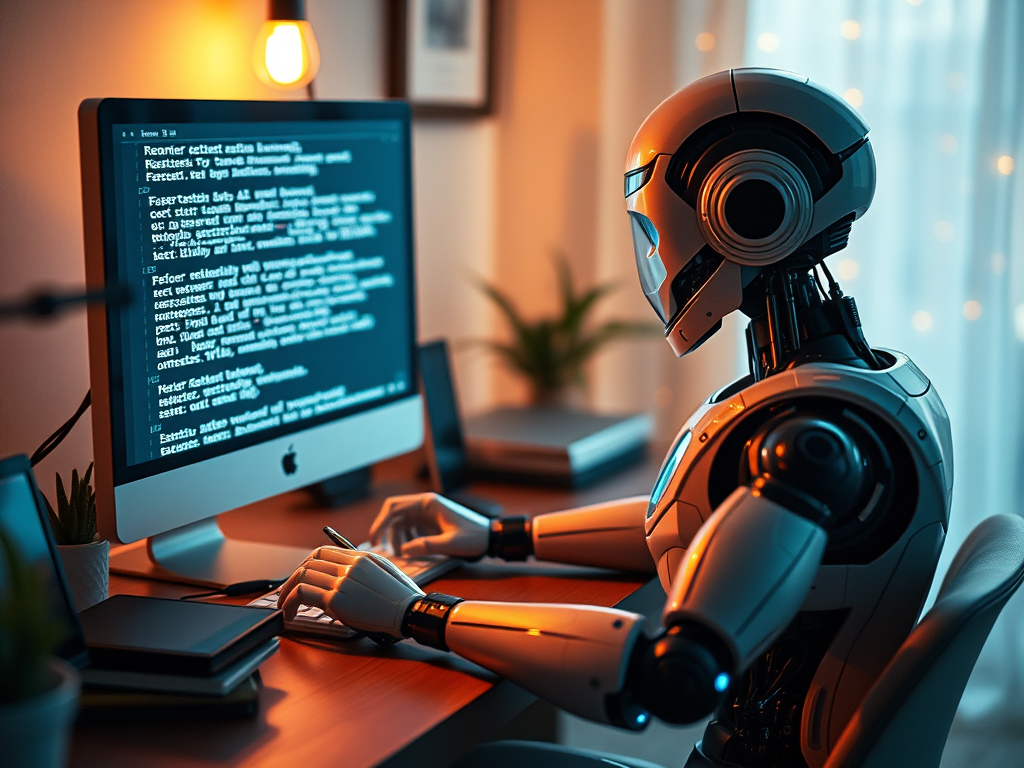
Spotting AI-Generated Content: How to Tell if ChatGPT Wrote It
Hey bloggers!
AI is everywhere online these days, and blogging is no exception. While some feared AI like ChatGPT would kill blogging, many, like Jatin Bansal, see it as a helpful tool. However, over-reliance on AI is becoming apparent, with telltale signs popping up in articles and even social media posts. Here’s what to look for:
- Stray Symbols: Keep an eye out for random characters like ###, **, *, or quotes. These are often leftover markup from the AI’s formatting (for headings, bolding, italics, etc.). Pasting into a program that preserves formatting before your final destination (like Grammarly) can help.
- Buzzword Overload: Watch out for unusual phrasing and an excessive use of buzzwords, like “nitty-gritty.”
- Cliché Intros: Articles or sentences starting with phrases like “In this data-driven world…” or “In today’s fast-paced environment…” are often giveaways.
- Formulaic Conclusions: Conclusions that begin with something like, “By doing X and Y, you can achieve Z” can also be a sign.
This isn’t an anti-AI rant! The goal is simply to encourage careful review before publishing. Always double-check your work, whether AI-assisted or not.
Just for fun, I’m going to have Gemini rewrite this and see what happens. Let me know in the comments which version you prefer—I’m curious to hear your thoughts!
PS: Well, would you look at that? Not so AI as I was expecting.
About the Author:
I’m Astrid, a biologist who made a career shift to become a virtual assistant and an accountability partner. My journey from the world of science to customer service and freelancing has given me a unique perspective on life, and I sometimes share it here on WordPress.
Do you need a capable and reliable accountability partner? Contact me on Fiverr or LinkedIn.

Latest posts
-

What Biology Can’t Decide for Us: The Making of a Good Person
What does it mean to be a good person? View all responses Being a good person is not simply about what kind of brain you were born with. Biology clearly plays a role. Genetics and… Read more
-

Multitasking is overrated… and not good. An opinion
Focusing on one thing at a time is way better, although complicated nowadays. What do you think about multitasking? Read more
-

Technology is training your attention span… to shrink
Recent headlines might make you feel like your brain is failing you, or maybe you have noticed on your own. Well, that’s not surprising. On August 20, 2026, new coverage of Dr. Gloria Mark’s research… Read more


Leave a short reply here! This helps a small content creator.