Procrastination isn’t a sign of laziness or a character flaw; it’s a deeply ingrained psychological response to stress and overwhelm.
If you’ve ever found yourself reorganizing your spice rack when a deadline looms, welcome to the club. Procrastination is a cycle we all fall into, and it is entirely normal. Before we dive in, let’s clear the air: procrastination is not a time-management problem or a sign of laziness. Instead, extensive research identifies procrastination as a problem of emotional dysregulation.
The Toddler vs. The Adult in Your Brain
When you look at a task you’ve been avoiding, your brain is actually a battlefield for a fierce evolutionary conflict between two distinct regions: the limbic system and the prefrontal cortex.
- The Limbic System (The Toddler): This is the impulsive part of your brain, focused solely on immediate pleasure and the avoidance of pain. This system houses the amygdala, our brain’s threat detector, which perceives an intimidating or boring task not as a project, but as a genuine threat to our well-being and self-esteem.
- The Prefrontal Cortex (The Adult): In contrast, the prefrontal cortex is the adult or the rational planner, responsible for executive functions like decision-making, long-term planning, and impulse control.
When we face a task that triggers anxiety or fear, the amygdala initiates a hijack, steering us toward immediate relief—doing anything BUT the actual task. This relief provides a short-term dopamine hit, reinforcing the neural pathways associated with avoidance. Ultimately, we avoid the task because of the negative feelings it evokes. Whether it is boredom, frustration, resentment, or self-doubt, we delay the action as a strategy for short-term mood repair.
How to Trick Your Brain into Action
If procrastination is an emotional coping mechanism, how do we get things done? We have to bypass the amygdala toddler before it can object. Here are three actionable frameworks to minimize friction and trick your brain into taking action:
1. Shrink the First Step (The Two-Minute Rule) Often, the friction of starting is significantly higher than the friction of continuing. To combat this, shrink the task down until it feels almost ridiculously simple.
- Instead of “write the article,” the task becomes “open the document and write the title”.
- Instead of “clean the kitchen,” the task becomes “empty the sink”. By lowering the activation cost of getting moving, you build momentum that often carries you well past the two-minute mark.
2. The Pomodoro Technique & Micro-Sprints When tasks feel overwhelming, time-based constraints can create a healthy sense of urgency. Developed by Francesco Cirillo in the late 1980s, the Pomodoro Technique involves breaking your work into focused intervals (typically 25 minutes), separated by 5-minute breaks.
- If a 25-minute block still triggers your avoidance, you can try a Micro-Win Sprint.
- Divide one hour into 10-minute work chunks and 2-minute breaks, repeat this 5 times.
- During those 10 minutes, focus only on the Next Action, the smallest step that you can take. The smaller the step, the better.
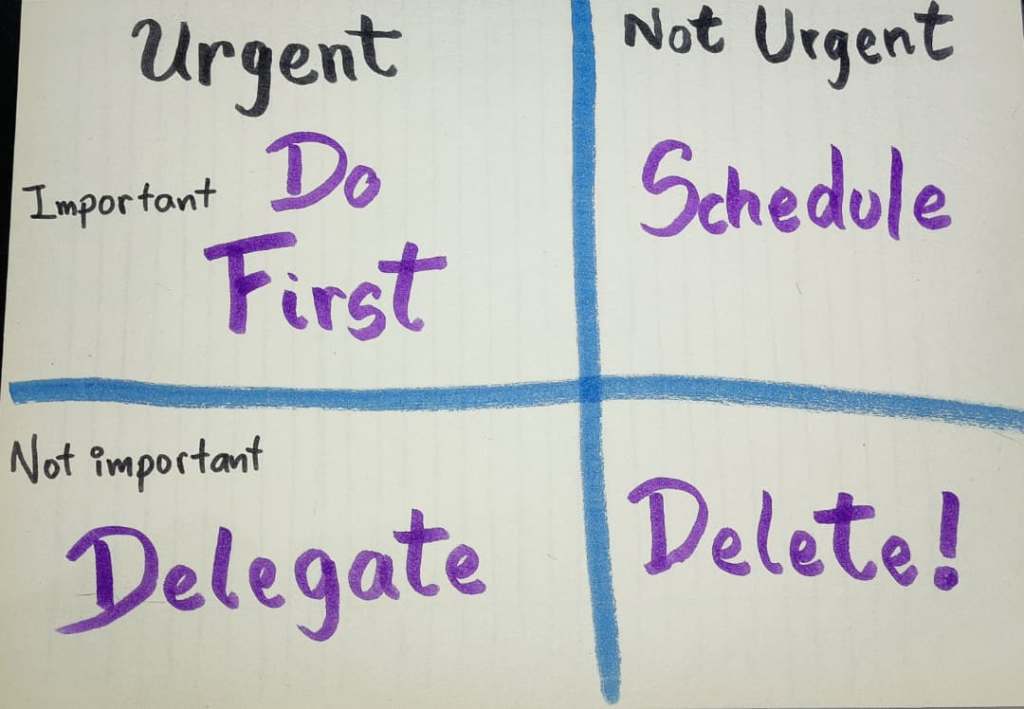
3. The Eisenhower Matrix & Timeboxing Sometimes we procrastinate because we don’t know what actually matters. The Eisenhower Matrix is a classic productivity framework that helps you categorize tasks by urgency and importance (Do First, Schedule, Delegate, or Delete).
Once you isolate an important task with a “fuzzy boundary” (like writing, planning, or organizing), apply a timebox.
- Now, Parkinson’s Law states that work expands so as to fill the time available for its completion.
- To use this in your favor, estimate honestly how long a task should take, cut that estimate in half, and set a timer.
- Work until the timer ends, then stop. This removes the unconscious assumption that a task should take as long as you happen to have.
What is the biggest procrastination hurdle you are facing right now? Is it anxiety, boredom, or self-doubt? Let me know in the comments below, or grab my free Accountability Guide to start building a system that actually works for your brain!






Leave a short reply here! This helps a small content creator.